
SAY YES
TO LESS

Get to know the latest Guidance.
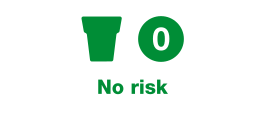
0 drinks per week
Not drinking has benefits, such as better health, and better sleep.
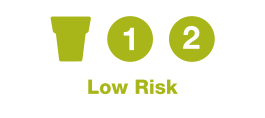
1 to 2 standard drinks per week
You will likely avoid alcohol-related consequences for yourself and others.
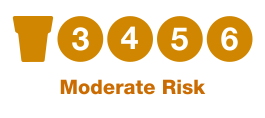
3 to 6 standard drinks per week
Your risk of developing several types of cancer, including breast and colon cancer, increases at this level.
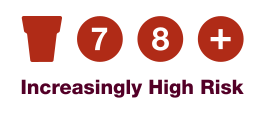
7 or more standard drinks per week
Your risk of heart disease or stroke increases.
Each additional standard drink
Radically increases the risk of these alcohol-related consequences.
0 drinks per week
Not drinking has benefits, such as better health, and better sleep.
1 to 2 standard drinks per week
You will likely avoid alcohol-related consequences for yourself and others.
3 to 6 standard drinks per week
Your risk of developing several types of cancer, including breast and colon cancer, increases at this level.
7 or more standard drinks per week
Your risk of heart disease or stroke increases.
Each additional standard drink
Radically increases the risk of these alcohol-related consequences.
Understand the risks.
Any amount of alcohol use can result in harm to your health and wellbeing. According to the new Guidance on Alcohol and Health, drinking alcohol beyond low risk levels can contribute to premature death from a wide range of diseases and other alcohol related harms. No amount of alcohol is good for your health.
What is a standard drink?
A standard drink in Canada has 13.45 grams of alcohol, no matter what kind of drink it is. This means that a 142 ml glass of wine and a 341 ml glass of beer are both equal to one standard drink. According to the Canadian Centre on Substance Use and Addiction, the following drinks are all equal to one standard drink.

Beer
341 ml (12 oz) of beer or 5% alcohol

Cooler, cider, ready-to-drink
341 ml (12 oz) of drinks 5% alcohol

Wine
142 ml (5 oz) of wine 12% alcohol

Spirits (whisky, vodka, gin, etc)
43 ml (1.5 oz) of spirits 40% alcohol
Check your risk level.
What do you drink?
How much do you drink?

Beer (341 ml) 5% alcohol


Tall Can of Beer (473 ml) 5% alcohol

Cooler, Cider. Ready-to-Drink (351 ml) 5% alcohol

Glass of Wine (5 oz pour/ 142 ml) 12% alcohol
Single Shot of Spirits (1.5 oz) 40% alcohol
Double Shot of Spirits (3oz) 40% alcohol

Custom Drink
Your Results

Tips to stay on track:
- Stick to the limits you set for yourself.
- Drink slowly.
- Drink lots of water.
- For every drink of alcohol, have a non-alcoholic one.
- Choose alcohol-free or low-alcohol beverages.
- Eat before and while you’re drinking alcohol.
- Have alcohol-free weeks or do alcohol-free activities.
Tips to stay on track:
- Stick to the limits you set for yourself.
- Drink slowly.
- Drink lots of water.
- For every drink of alcohol, have a non-alcoholic one.
- Choose alcohol-free or low-alcohol beverages.
- Eat before and while you’re drinking alcohol.
- Have alcohol-free weeks or do alcohol-free activities.
Tips to stay on track:
- Stick to the limits you set for yourself.
- Drink slowly.
- Drink lots of water.
- For every drink of alcohol, have a non-alcoholic one.
- Choose alcohol-free or low-alcohol beverages.
- Eat before and while you’re drinking alcohol.
- Have alcohol-free weeks or do alcohol-free activities.
Tips to stay on track:
- Stick to the limits you set for yourself.
- Drink slowly.
- Drink lots of water.
- For every drink of alcohol, have a non-alcoholic one.
- Choose alcohol-free or low-alcohol beverages.
- Eat before and while you’re drinking alcohol.
- Have alcohol-free weeks or do alcohol-free activities.
How alcohol affects your health.

Cancer and alcohol
Alcohol is a carcinogen that can cause at least seven types of cancer, including breast or colon cancer, as well as cancers of the rectum, mouth, throat, liver, esophagus and larynx.

Heart health and alcohol
Drinking alcohol is a risk factor for many types of cardiovascular disease, including hypertension, heart failure, high blood pressure, atrial fibrillation and hemorrhagic stroke.

Violence and alcohol
Alcohol is frequently associated with violent and aggressive behaviour among adults, including intimate partner violence and sexual violence. Alcohol can also increase the severity of violent incidents.
What do we know about alcohol harms in NS?

2,791
Hospitalizations wholly attributable to alcohol in 2021/2022.

2,145
Incidents of alcohol-impaired vehicle operation in Nova Scotia in 2022.

18
Deaths wholly attributable to alcohol in 2021.

$652 Million
Costs associated with alcohol-related harms in Nova Scotia in 2020.
2,791
Hospitalizations wholly attributable to alcohol in 2021/2022.
2,145
Incidents of alcohol-impaired vehicle operation in Nova Scotia in 2022.
18
Deaths wholly attributable to alcohol in 2021.
$652 Million
Costs associated with alcohol-related harms in Nova Scotia in 2020.
Help yourself to less.
There are things you can do to reduce your drinking in steps. Any reduction in alcohol use helps lower your health risks. Every little bit counts.
Here’s a good way to do it.
Try counting the number of drinks you have in a week and then set a weekly target. If you decide to drink, make sure you don’t exceed 2 drinks on any day.
Tips to stay on track
- Stick to the limits you set for yourself.
- Drink slowly.
- Drink lots of water.
- For every drink of alcohol, have a non-alcoholic one.
- Choose alcohol-free or low-alcohol beverages.
- Eat before and while you’re drinking alcohol.
- Have alcohol-free weeks or do alcohol-free activities.